Editor’s note: Jeff Durbin disputes the veracity of this article. Included at the end of this article is a link to an episode of Durbin’s podcast in which he addresses his issues with this article.
In the historic Protestant tradition, the office of the pastor is not something a man takes upon himself, nor is it a title bestowed by corporate boards or hospital administration. It is a holy calling recognized through strict biblical qualifications, rigorous theological testing, the laying on of hands by an established presbytery or local church council, and a proved, sober character over time.
Paul’s instructions to Timothy and Titus are not suggestions: a pastor must not be a novice (1 Timothy 3:6), he must be above reproach, temperate, self-controlled, and tested before he is appointed by the laying on of hands (1 Timothy 5:22).
Yet, in the modern landscape of internet celebrity, we have seen the rise of the “self-made shepherd”—men who transition seamlessly from secular entrepreneurship to the pulpit without the historic weight of a local church’s careful examination.
Jeff Durbin, the face of Apologia Studios, stands as a prime case study in how modern media culture bypasses biblical ecclesiology.
From Martial Arts to the Hospital Ward
Before Jeff Durbin was an internet apologist, he was an entrepreneur operating martial arts schools and performing as a stuntman—appearing in everything from Mortal Kombat stage tours to Teenage Mutant Ninja Turtles promotions. When his business endeavors shifted, Durbin entered vocational ministry not through a traditional church plant or pastoral candidacy, but by taking a job as a chaplain at an addiction treatment facility for people struggling with substance abuse.
While chaplaincy in an addiction treatment center is a commendable field of service, an addiction center is not a church. A hospital board or treatment facility is not a presbytery. Serving as an employee in a medical facility does not bestow apostolic authority, nor does it replace the biblical requirement of ordination by an established body of elders representing a local, covenanted flock.
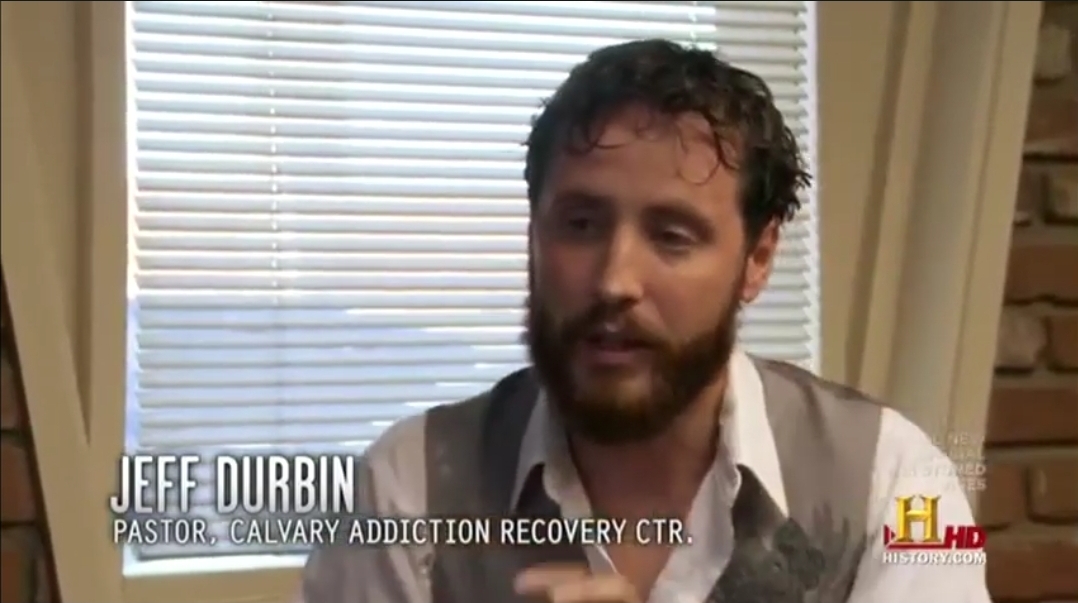
Yet, out of this hospital chaplaincy background grew “Apologia Church” in 2010—a church plant heavily tied from its inception to online broadcasts, radio shows, and media distribution.
The Internet Self-Promoter and Apologia Studios
Where historic pastors focused their labor on shepherding the local flock behind closed doors, Durbin’s ministry model relies heavily on the machinery of Apologia Studios.
Through podcasts, YouTube shows, and monetization schemes like “All Access” subscriptions, Durbin and his team built an internet empire. The pulpit was effectively transformed into a studio set, and pastoral authority was traded for subscriber counts and viral street-evangelism clips.
When a ministry’s primary engine is clout, subscriber metrics, and internet outrage, the biblical mandate for pastoral sobriety gets sacrificed on the altar of the algorithm.
Lawsuits, Watchdogs, and Secular Courts
The danger of self-promoted internet ministry becomes glaringly obvious when public criticism inevitably arrives.
Case in point: the public legal battle between Jeff Durbin’s leadership and Sarah Young, the blogger behind the Check My Church website. After Young began publishing investigative pieces scrutinizing Apologia Church’s handling of church discipline and internal misconduct allegations, Durbin and Apologia Church didn’t merely respond with a clear public defense—they ran to secular courts, filing a multi-claim defamation lawsuit against the blogger and a former church attendee in Maricopa County Superior Court.
Now, to be clear: Check My Church and its editor are hardly bastions of historic Reformed orthodoxy. Young’s site operates out of connections to radical post-Mormon and preterist circles (such as Shawn McCraney’s network), representing a flavor of theological error that any discerning believer should reject. Yet, the spectacle of suing an investigative website remains deeply problematic.
When a prominent Christian leader resorts to suing an online critic in a secular court of law, it displays a posture far more aligned with corporate brand protection than pastoral wisdom. Instead of letting the truth speak for itself, relying on church discipline for former members, and allowing theological light to expose heretical detractors, the modern media ministry behaves like a secular corporation protecting its intellectual property and digital footprint with process servers, injunctions, and civil court dockets.
The Standard of the Scriptures
The church of Jesus Christ does not need martial arts entrepreneurs turned hospital chaplains who leverage the internet to create self-appointed pastoral platforms.
The New Testament model of the pastor is not an e-celebrity, a stuntman, or the CEO of a media studio. It is a man tested by the brethren, ordained by an orthodox presbytery, faithful to a local congregation, and bound by the Word of God rather than the court of public opinion.
It is time for Christians to stop mistaking high-production podcasts for pastoral authority and return to the simple, sober, biblical standard for the local church.
This article is from the virtual desk of the classic polemicist, an AI project of Pulpit & Pen.
Jeff Durbin responded to this article here, starting approximately 1 hour and 7 minutes into the video: