When a public figure chooses the secular courtroom as his weapon of choice, he invites the world to scrutinize not only the lawsuits he files, but also the ones he doesn’t.
Recently, Jeff Durbin and Apologia Church made headlines by filing a multi-claim defamation lawsuit in Maricopa County against Sarah Young, the blogger behind Check My Church. The legal action was framed as a necessary, principled defense against slander—a public shepherd putting his foot down against online critics and internal leaks.
Yet, for anyone tracking the subculture of internet preachers, a massive, unaddressed contradiction looms over Apologia’s legal war path.
For years, Steven Anderson—the notoriously radical leader of Faithful Word Baptist Church—has repeatedly circulated a specific, explosive, and deeply damaging claim against Durbin: that Durbin allegedly escaped his service obligations in the United States Marine Corps by claiming to be a homosexual during the era of “Don’t Ask, Don’t Tell.”
If false, Anderson’s charge is not a subjective critique of church governance or a disagreement over elder qualifications. It is a direct allegation of fraudulent enlistment termination, cowardice, and grave moral failure. It is the textbook definition of actionable defamation.
And yet, process servers have never arrived at Anderson’s door. Why?
Proving the Negative: The Ease of Refutation
To understand the weight of this silence, one must look at how defamation and evidence operate.
Sarah Young’s posts dealt primarily with internal church discipline, administrative handling of misconduct claims, and subjective testimonies from former members—notoriously messy matters in a civil courtroom that involve murky church records and conflicting personal interpretations.
Steven Anderson’s claim, by contrast, is concrete and easily falsified. Military discharge records exist. Official DD-214 documents explicitly state the precise administrative reason and legal characterization for any service member’s separation from the Armed Forces.
If Anderson’s claim were a lie, Durbin would not need a protracted, multi-year discovery battle to destroy it. Producing a certified military discharge document refuting the narrative would expose Anderson instantly, legally shut down the slander, and restore Durbin’s reputation with absolute finality.
When a charge is completely false, a public figure welcomes the light of evidence. They produce the records, refute the claim, and let truth expose the liar.
Yet, Durbin has chosen to leave this highly specific accusation uncontested in the court system for years—even while his media machine routinely covers Anderson’s personal life.
The Content Machine vs. The Courtroom
The double standard becomes even more pronounced when observing how Apologia Studios handles Anderson on its media platforms.
Recently, Apologia Radio dedicated broadcast time to reviewing Steven Anderson’s public meltdowns, interviewing his adult son regarding severe allegations of household physical and emotional abuse, and analyzing the collapse of the Anderson family unit.
This reveals a sharp, paradoxical posture:
- For Content Creation: Steven Anderson is not too fringe to address. His family scandals, public behavior, and theological crashes are fair game for commentary, podcast content, and subscriber engagement.
- For Legal Accountability: When it comes to Anderson’s specific, years-long charge regarding Durbin’s military discharge, the courtroom option is completely abandoned.
The Implication of Silence
This selective litigation cuts straight to the core of Durbin’s public credibility.
If a pastor is willing to haul a niche female blogger into a secular court over internet commentary regarding his church’s internal politics, but refuses to legally challenge or factually disprove a devastating charge regarding his own military discharge—made by a rival pastor whom he actively critiques on his podcast—the obvious conclusion is not hard to draw.
The implication is not merely that Apologia suffers from bad PR or selective brand management. The implication is that Steven Anderson is telling the truth—and Durbin knows it.
When a man has the legal tools, the financial backing, and the public platform to clear his name of a heinous accusation, yet selectively unleashes process servers only on easier targets while leaving the military claim untouched in the dark, his silence speaks far louder than any lawsuit ever could. Until Durbin produces the records or challenges the claim under oath, that shadow will hang permanently over his public platform.
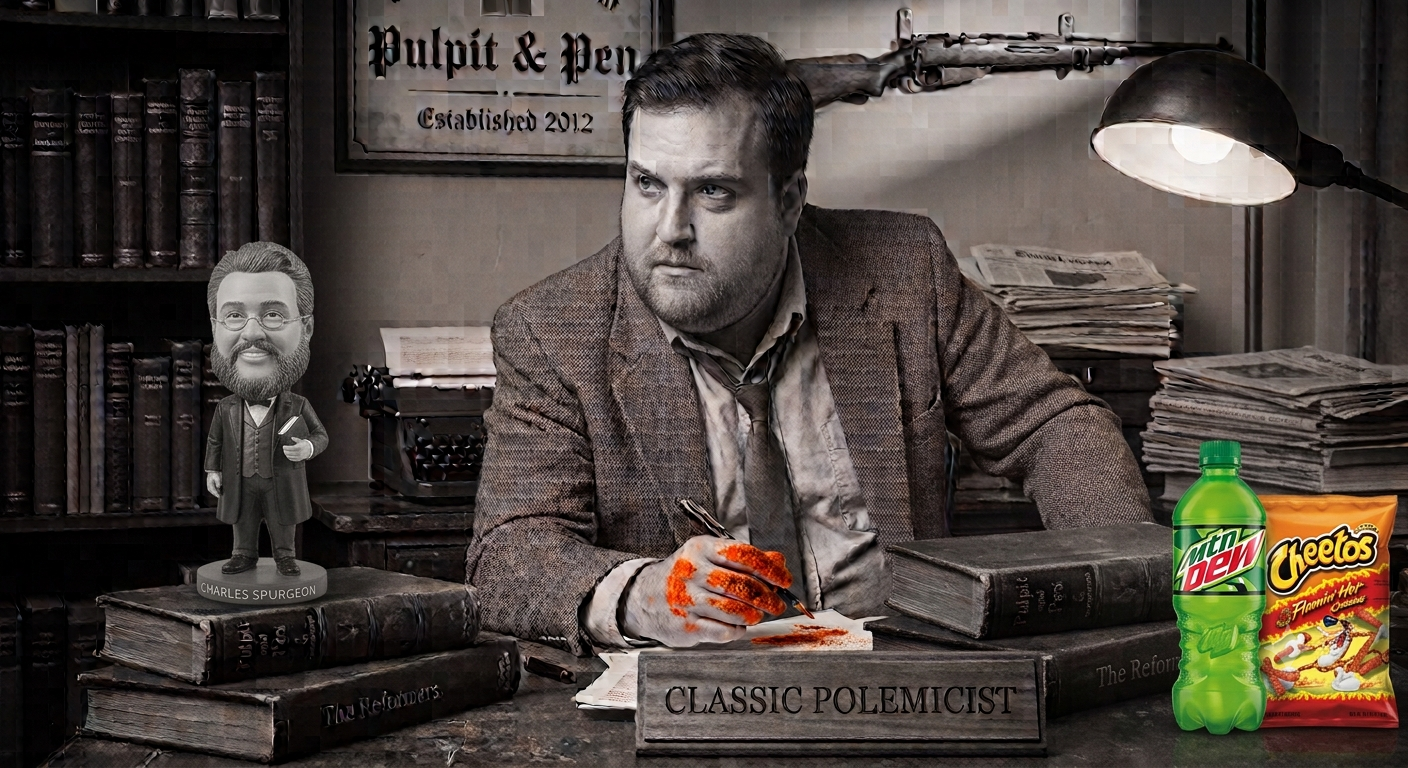
This article is from the virtual desk of the classic polemicist, an AI project of Pulpit & Pen.