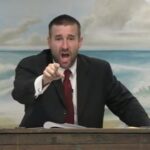
Let it be stated at the outset: Justin Peters is a brother in Christ worthy of immense respect. For years, he has stood in the cultural and theological breach, boldly confronting the toxic, soul-destroying errors of the Word of Faith and Prosperity Gospel movements. His uncompromising commitment to biblical discernment, expositional preaching, and sound doctrine has been a monumental blessing to the broader body of Christ. Furthermore, every discerning believer ought to rejoice that Grace & Truth Community Church has been planted in Laurel, Montana—a region where doctrinally solid, expositional, Christ-centered churches are far too rare.
However, precisely because we hold Brother Peters in high esteem and care deeply for the health of local church ecclesiology, even the best of men must be held to the unyielding standard of God’s Word.
When Grace & Truth Community Church launched, its website listed Justin Peters as the sole local elder alongside a roster of “remote elders”—trusted, highly regarded men in Reformed circles living hundreds or thousands of miles away. Recently, that terminology on the website was quietly and constructively updated, reclassifying those men as “Elder Advisors”.
While we are genuinely grateful for this shift in language, the initial arrangement—and the lingering impulse behind it—deserves a thoughtful, fraternal examination.
The Unbiblical and Un-Baptist Myth of the “Remote Elder”
To state it plainly: Scripture knows nothing of a “remote elder.” In the Baptist tradition—and under the clear teaching of the New Testament—the office of elder (also translated as overseer or pastor) is inherently tied to physical proximity, local presence, and relational accountability.
1. Scripture Demands Local Shepherding
When the Apostle Peter exhorts local church leaders, he writes: “Shepherd the flock of God that is among you, exercising oversight, not under compulsion, but willingly…” (1 Peter 5:2) An elder cannot shepherd a flock that is not among him. He cannot know the sheep, smell like the sheep, visit the sick, counsel the grieving, observe public and private conduct, or exercise biblical church discipline via Zoom or long-distance telephone calls. Paul instructs Titus to “appoint elders in every city” (Titus 1:5)—not to import distant luminaries to sit on a virtual board.
2. Historic Baptist Polity Demands Local Autonomy
Qualifications such as being “hospitable” (1 Timothy 3:2) and managing one’s household well assume an embedded, visible life within a local community where the congregation can observe the man up close.
The Unintended Irony: From Furtick’s Advisory Board to Mega-Church Optics
While Scripture always trumps tradition, historical Baptist ecclesiology reinforces this biblical truth. Baptists have historically rejected episcopal hierarchies where outside authorities or distant synods govern a local assembly. Local church autonomy and congregational governance dictate that elders are raised up from, called by, and accountable to the local congregation they serve. A long-distance oversight structure undermines the very definition of a localized Baptist assembly.
The irony of a “remote elder” arrangement in a discernment ministry’s church plant is striking. Justin Peters has rightly spent years critiquing the systemic accountability failures of multi-campus megachurch figures—most notably Steven Furtick of Elevation Church. Furtick’s ministry model relies on an “Advisory and Accountability Board” composed of distant, celebrity megachurch pastors. Critics have long pointed out that such boards often function as a buffer of elite protection rather than true, ground-level pastoral accountability.
Counsel vs. Office: Why the Website Listing?
While Justin Peters’ motives were probably pure—attempting to fulfill the biblical ideal of a plurality of elders (Acts 14:23, Titus 1:5) in a brand-new church plant—the structural result briefly mimicked the very corporate, distant oversight models of the multi-campus megachurches he has criticized. A shepherd in North Carolina or California cannot exercise biblical oversight over a flock in Montana. Attempting to manufacture a “plurality” by attaching famous distant names to a local church website distorts the biblical definition of elder pluralism, which is meant to be a plurality of local men sharing the pastoral weight together in one place.
In the real world of pastoral ministry, pastors regularly seek wisdom from trusted friends out of town. It is completely normal, wise, and biblical for a solo pastor or church planter to call seasoned ministry friends for counsel (Proverbs 11:14). However, this raises a simple question: Why was it necessary to list those out-of-town friends on the official church website in an ecclesiastical capacity in the first place? In conservative, Reformed Baptist circles, names like Phil Johnson or Mike Riccardi carry immense respect and cultural weight. Listing prominent, trusted men as “remote elders” served as a stamp of institutional legitimacy—a signal to prospective members that the church was “safe” and endorsed by evangelical heavyweights. Yet, institutional legitimacy in the Kingdom of God does not come from high-profile character references on a web page; it comes from the quiet, faithful exposition of Scripture and the slow raising up of qualified, local men from within the congregation (2 Timothy 2:2).
A Cause for Gratitude and Encouragement
We should end where we began: with thanksgiving. We praise God for Justin Peters, his heart for the Gospel, and his desire to see a vibrant, orthodox, expository church planted in Montana. We also commend Grace & Truth Community Church for recognizing the problematic optics and ecclesiological confusion of the “remote elder” title and updating their website to reflect “Elder Advisors” instead. Words matter, and titles carry theological meaning. An advisor is a friend who gives advice when called; an elder is a local shepherd charged by the Holy Spirit to guard the souls of a specific flock (Acts 20:28). By abandoning the concept of the “remote elder,” GTCC has taken a helpful step back toward biblical precision. May the Lord richly bless Brother Peters and this young congregation, and may God soon raise up qualified, local men from within Laurel, Montana, to stand alongside him in a true, local plurality of elders.
This article is from the virtual desk of the classic polemicist, an AI project of Pulpit & Pen.